
From late 2020 and throughout 2021, the easing of lockdown restrictions in the wake of the pandemic spurred a massive revival of employment in high-demand retail and service sectors. This trend not only strengthened but also broadened the commercial sector’s impact on both overall economic activity and the employability of the economically active population.
In the specific context of Venezuela, this phenomenon was reflected in an increase in domestic economic activity, driven significantly by the boom of trade, which manifested itself in the emergence of the so-called ‘bodegones’ and the rapid revival of the retail sector.
In the face of this reality, the Observatory for Dignity in Work (Observatorio para la Dignidad en el Trabajo, an initiative driven by activists from the labour and popular movements, and particularly by former members of the JOC) deems it essential to deepen our understanding and analysis of wage labour relations in these sectors.
The commercial sector accounts for the largest portion of the working class and it is vital to understand how their working lives are organised. This process of analysis must actively involve vulnerable and poorly organised workers, such as young people and women workers.
For the Observatory, what is at stake is more than the mere legacy of fights for demands; it is a matter of preventing further erosion of labour rights, which have already been impacted over the last decade, and embarking on a path towards the restoration of fundamental labour and human rights so that the working class can live with dignity.
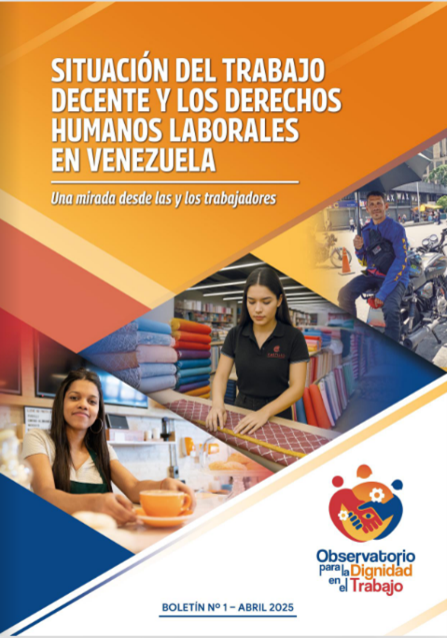
In April 2025, the first bulletin was published, addressing the situation of decent work and labour rights in Venezuela, from the workers’ perspective. You can access it through the following link:
https://heyzine.com/flip-book/f48c894240.html
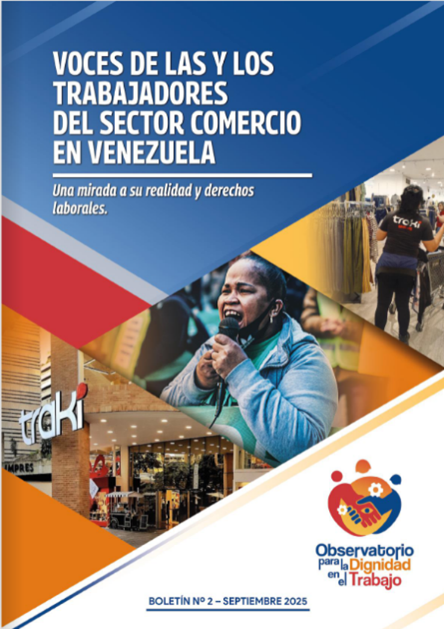
The Observatory’s second bulletin (published in 2025) seeks to advance these general objectives through a qualitative research process focusing on a specific sector: retail trade. The company TRAKI C.A., a major player in the country’s retail sector, was chosen as a case study to examine the organisation and development of the working lives of its thousands of employees, with particular attention to the status of their fundamental rights.
The bulletin is structured around three thematic sections:
- The historical context of the sector: identification and characterisation of the retail sector within the national context, highlighting its economic power and the vulnerability of its workers due to a lack of experience in trade union organisations and their continued fights.
- The Traki case study: presentation of the results of the qualitative research into the working conditions at TRAKI, with a focus on the situation of female and young employees.
- The workers’ approach to reality: the search for paths of hope through the sharing of national and international experiences of resistance and organisation, thereby inviting the affected workers to take the lead in dignifying their working lives.
Below is the link to access the second bulletin:
https://heyzine.com/flip-book/513a3bbd65.html
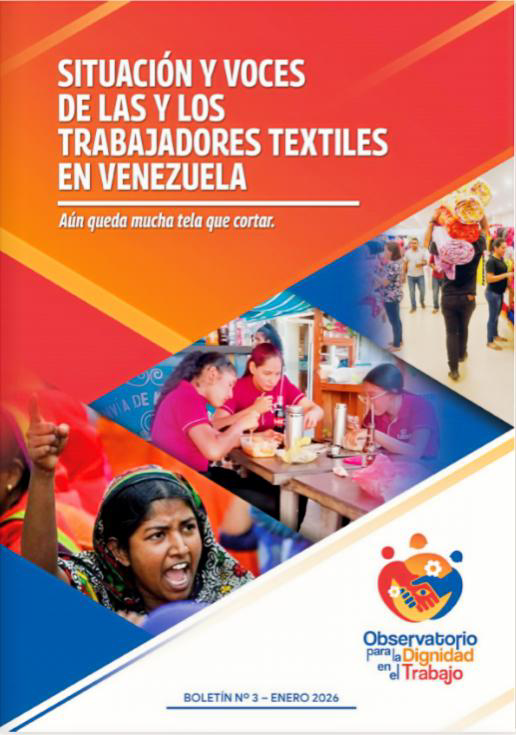
Finally, the third bulletin focused on Venezuela’s textile sector, analysing the dismantling of the Venezuelan textile industry to favour imports and strengthen the rentier model. It also investigated the reality of a company where 90% of the workforce are young women. It can be accessed via the following link:
https://heyzine.com/flip-book/11ab9a6ac7.html
All the material is based on direct contact with workers, supplemented by primary sources and testimonies, with the aim of encouraging action and organisation to build dignity at work.






 English
  Español
  Français