
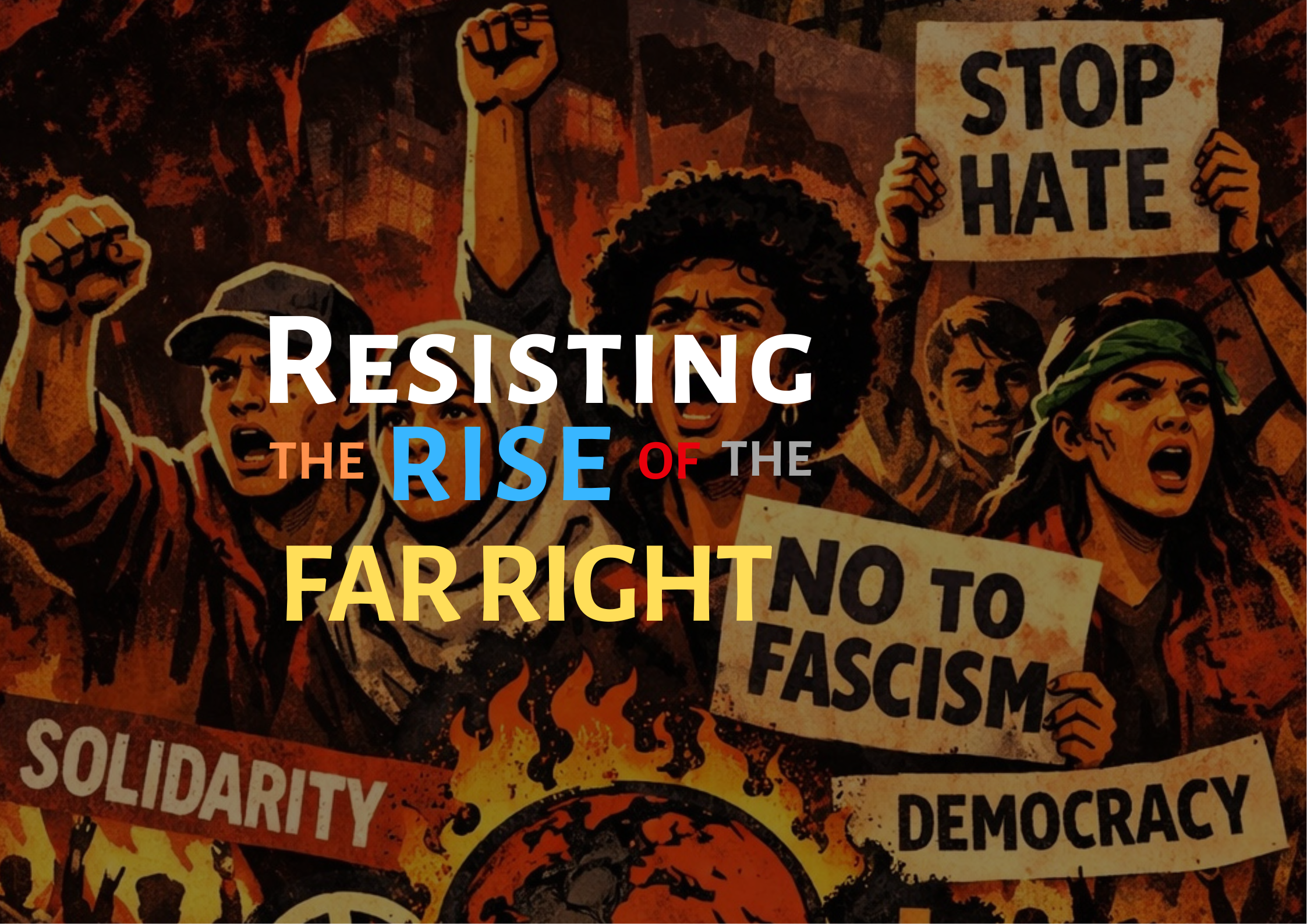
The International Young Christian Workers (IYCW) stands alarmed by the global rise of far-right ideologies. These movements threaten democracy, attack the rights of marginalized communities, and undermine decades of hard-won social progress. Across countries, we observe increasing precarity for young workers, scapegoating of migrants, rollback of gender and LGBTQIA+ rights, and weakening of international institutions and civil society.
Executive summary
This position paper reflects the lived realities shared by young workers from around the world during IYCW's centenary activities. It highlights how far-right and neoliberal agendas feed off each other—promoting individualism, spreading disinformation, and dividing communities through fear and exclusion.
In response, the IYCW reaffirms its commitment to solidarity, justice, and internationalism. We call on governments and institutions to protect social rights, defend vulnerable groups, regulate digital platforms, and uphold democratic space for social movements. At the same time, we commit ourselves to grassroots organizing, political education, international advocacy, and building alliances to resist this threat.
Far-right ideologies do not go away on their own. They must be confronted—through collective awareness, organized resistance, and the unwavering belief that a just and equal world is possible.
Introduction
The IYCW is a movement of young workers who develop actions to fight the injustices, starting from their own reality and experience of life and work. Young people learn to discover their dignity and meaning of life through the actions and activities of YCW. In recent years, we have witnessed the dangerous rise of far-right ideologies around the world—threatening democracy, spreading hate, and attacking the rights of young people, women, migrants, workers and different minorities. As a movement committed to justice and equality, the IYCW believes it is crucial to understand this phenomenon, reflect on its impacts, and take a firm position to resist it. This paper presents our collective analysis and outlines the urgent need for organized action against the growing influence of the far right.
Problem definition /Background
We see the threat of rightist ideologies and especially the rise of the far right in many different forms. From general conservative tendencies in most countries to obvious far right governments in some, the overall shift in our societies is very clear. Many national movements of IYCW observe or even feel the effects of this development directly and organize with others to prevent. Some concrete examples are:
- In Belgium and Austria, budget cuts to civil society have already begun, and more austerity is expected also affecting the work of organizations.
- In Argentina, YCW members directly feel the impact of social security reforms that reduce access to public services, especially for precarious youth.
- In Peru, a new law gives the government increased control over NGOs, especially those receiving international funding. This threatens the independence of civil society and risks silencing organizations that defend human rights and hold authorities accountable.
- In Sri Lanka, far-right Sinhala-Buddhist nationalism remains strong despite the 2024 change in government. Reforms were promised, yet accountability for past war crimes is still rejected, leaving ethnic minorities facing discrimination and delayed justice.
- In the Philippines, civic space is shrinking as labor leaders, activists, and even church groups are labeled “terrorists.” Social media fuels fear and misinformation, leading to harassment and violence against those demanding justice.
The right-wing, neoliberal agenda is not a new problem, but it has reached a new level of influence in people’s thinking. It promotes individualism, weakens solidarity, and makes people believe that success only depends on personal effort. This way of thinking goes together with far-right ideas that blame certain groups and offer easy answers to complex problems. Social media makes it worse by spreading fear and misinformation—its algorithms are designed to promote extreme and sensational content, which helps far-right movements grow stronger and more accepted.
Impact analysis
This paper focuses on highlighting especially the effects on minority groups, international institutions and social movements. During a public forum in the scope of IYCW centenary celebration, young people from all over the world discussed and shared their own experiences and the realities of their countries. The core elements of this analysis are:
Young workers suffer the loss of achievements from former generations. In several countries, precarious work is increasing, often encouraged by policies that weaken social security and benefit employers. The erosion of protections—such as unemployment rights or pension security—creates long-term uncertainty and leaves a deep impact on young people’s trust in institutions. Many feel unheard by political decision makers as they try to build a future in the middle of climate, economic, and housing crises. This frustration and isolation can lead some to support radical or extreme solutions. Far-right ideologies present themselves as offering control and order, but they offer less protection and treat young people not as citizens with rights, but as replaceable human resources. They divide society, weaken solidarity, and further dismantle collective achievements that young workers rely on.
Migrants are used as scapegoats. A common strategy of the right to promote and justify extreme ideas has always been the targeting of vulnerable groups who cannot easily defend themselves. Migrants have become a main target of far-right, nationalist, and conservative groups, fomenting xenophobia and racism and blaming them for economic, cultural, and social problems. In many parts of the world, the hostile discourse that emerged from the far right has become normalized and socially acceptable, even beyond explicitly right-wing spaces. Meanwhile, migrant women face a double burden, often portrayed as symbols of a so-called foreign threat, while being erased from public debate and denied basic rights. These narratives are used to justify restrictive immigration policies, funding cuts to integration and youth services, and increasing surveillance and control in many countries.
Gender equality is being pushed back. The ideology the far right promotes throws society back into rigid, essentialist gender roles, portraying women primarily as mothers, caretakers, and transmitters of traditional values. This vision reduces women to their reproductive function and places the family under the “natural” authority of the father. Attacks on bodily autonomy—such as restrictions on abortion and contraception—go hand in hand with the erasure of women from political and social analysis. Feminist voices are often discredited or directly targeted, accused of threatening the “natural order” or the so-called traditional family. Across different countries, far-right groups adapt their rhetoric, sometimes even claiming to protect women’s rights while using feminism as a tool to promote racist or xenophobic ideas. Migrant and racialized women are especially affected, often portrayed as symbols of cultural danger, while at the same time denied visibility, resources, and rights. Though the language may differ, the global trend is alarmingly consistent: dismantling hard-won gender rights and reinforcing patriarchal control.
LGBTQIA+ rights are under attack. Far-right ideologies portray gender and sexual diversity as a threat to the “natural” family and national identity. LGBTQIA+ people are directly targeted, accused of undermining traditional values through so-called “gender ideology.” In many countries, queer communities face criminalization, reduced access to funding, and increasing social hostility. At the international level, progress on LGBTQIA+ rights is blocked or undermined in forums like the ILO, where some states refuse to address discrimination. These attacks often go hand in hand with sexism and racism, silencing voices that challenge patriarchal and heteronormative norms.
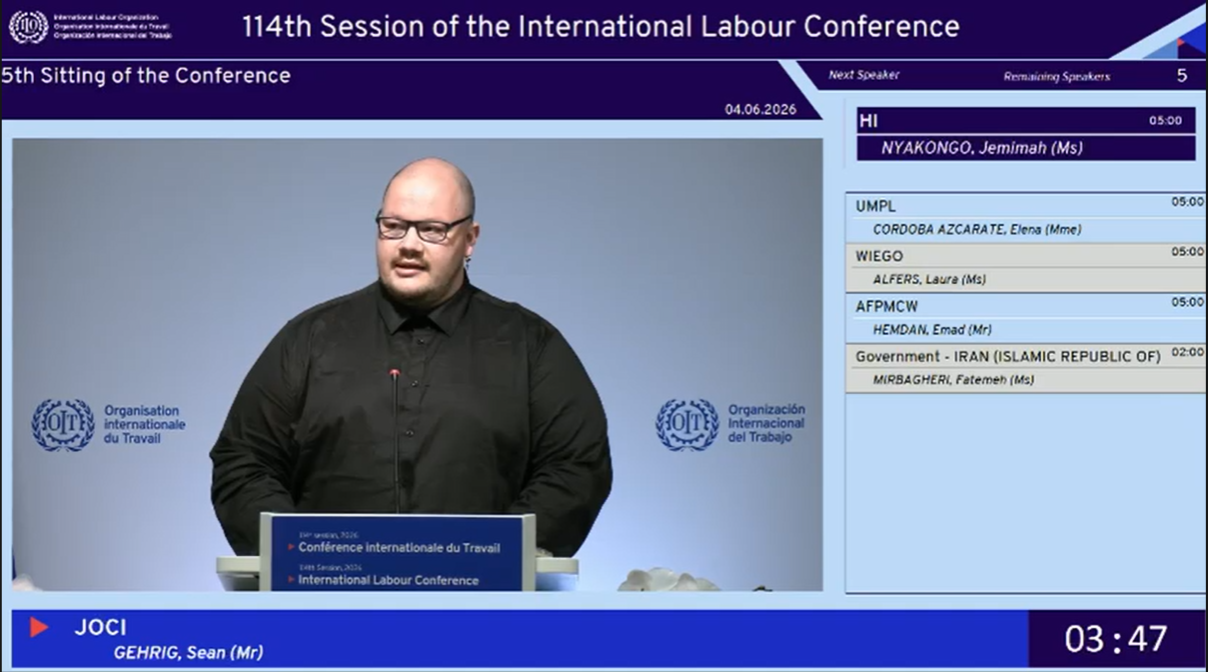
International institutions are weakened. The rise of far-right and nationalist governments has led to a growing distrust in multilateral institutions like the UN and ILO. Key countries, such as the United States, have reduced or withdrawn funding, causing major budget cuts—up to 44% for some agencies. This weakens global cooperation and threatens the protection of core rights. At the ILO, upcoming discussions on these rights face resistance from some member states, including the likelihood that the U.S. will support countries opposed to addressing such discrimination. As global solidarity is undermined, the space for rights-based dialogue continues to shrink.
Social movements are increasingly under attack through repressive laws, funding cuts, and divisive identity politics. These organizations, essential to defending democracy, are often the first targets in a hostile political climate. At the same time, the far right uses inclusive-sounding rhetoric—claiming equality and freedom for all, denying class divisions—to conceal its real agenda. In practice, inequality deepens, and vulnerable groups are excluded. Migrants, for instance, are welcomed in words but face exploitation and discrimination. Far-right forces invest in social media campaigns that use algorithms to amplify fear and emotional reactions, spreading carefully crafted propaganda that appears moderate or protective, but hides an exclusionary and dangerous ideology.
IYCW position
In facing the rise of the far right, it is essential to adopt a class-based, intersectional, and internationalist perspective. This means understanding how economic injustice, gender and racial inequality, and global power imbalances intersect—and building solidarity across borders to resist these interconnected threats. Far-right ideologies cannot be judged without their connection to neoliberalism and the structural, global threat they pose.
As International Young Christian Workers…
… we oppose all forms of discrimination and exploitation.
… we stand clearly against fascism and the mechanics of capitalism.
… we do not tolerate far-right ideology and its normalization in our societies and actively engage to fight it.
… we reaffirm the dignity and rights of all young workers and reject the rollback of social rights and protections.
… we resist the instrumentalization of feminism for racist or nationalist goals and support the full rights of LGBTQIA+ people.
… we defend the role of social movements and civil society and stand for international solidarity and cooperation.
We call governments, institutions and policymakers to
- Ensure sustainable funding for youth, social, and feminist organizations.
- Strengthen public social protection systems and reject austerity.
- Guarantee the independence of civil society and stop repressive NGO laws.
- Defend gender and LGBTQIA+ rights in international institutions like the ILO.
- Regulate digital platforms to combat hate speech and misinformation.
- Guarantee reproductive rights and fund inclusive feminist movements.
- Reform immigration and violence policies to protect, not punish.
- Acknowledge structural inequalities and legislate intersectionally.
- Reform labor policies to protect future rights.
- Reject punitive economic reforms that target the sick, unemployed, and precarious.
- Not fall for rightist rhetoric and not reproduce it.
We commit ourselves to
- Continue the grassroots organizing: continue base-building among young workers through concrete lived realities.
- Use our outreach to provide political education: outreach in schools, youth groups, education on democracy and critical thinking – learning to understand the elements of rightist ideologies and rhetoric and how to act on them.
- Engage directly in fighting the far-right and neoliberal ideologies: responding to far-right public actions, dialogue with individuals drawn to far-right ideas.
- Make coalitions and act in solidarity: build alliances with human rights groups, unions, and NGOs. Mobilize young people, social partners, and allies.
- International Advocacy: actively participate in international forums and institutions to defend fundamental rights.
Conclusion
The rise of the far right is not a distant or abstract threat—it is happening here and now, with real and harmful consequences for young people, workers, in particular migrants, women, and all other marginalized communities. It undermines democracy, spreads division, and seeks to reverse decades of social progress. This reality demands urgency.
As the International Young Christian Workers, we believe in the power of solidarity and organized action. We are not helpless in the face of hate and injustice—when we stand together, we can resist. Through grassroots work, political education, and international cooperation, we will continue to defend dignity, equality, and the right of all people to participate fully in society.
Now is the time to act. Democracy and social justice do not defend themselves. It is up to us.





 English
  Español
  Français