
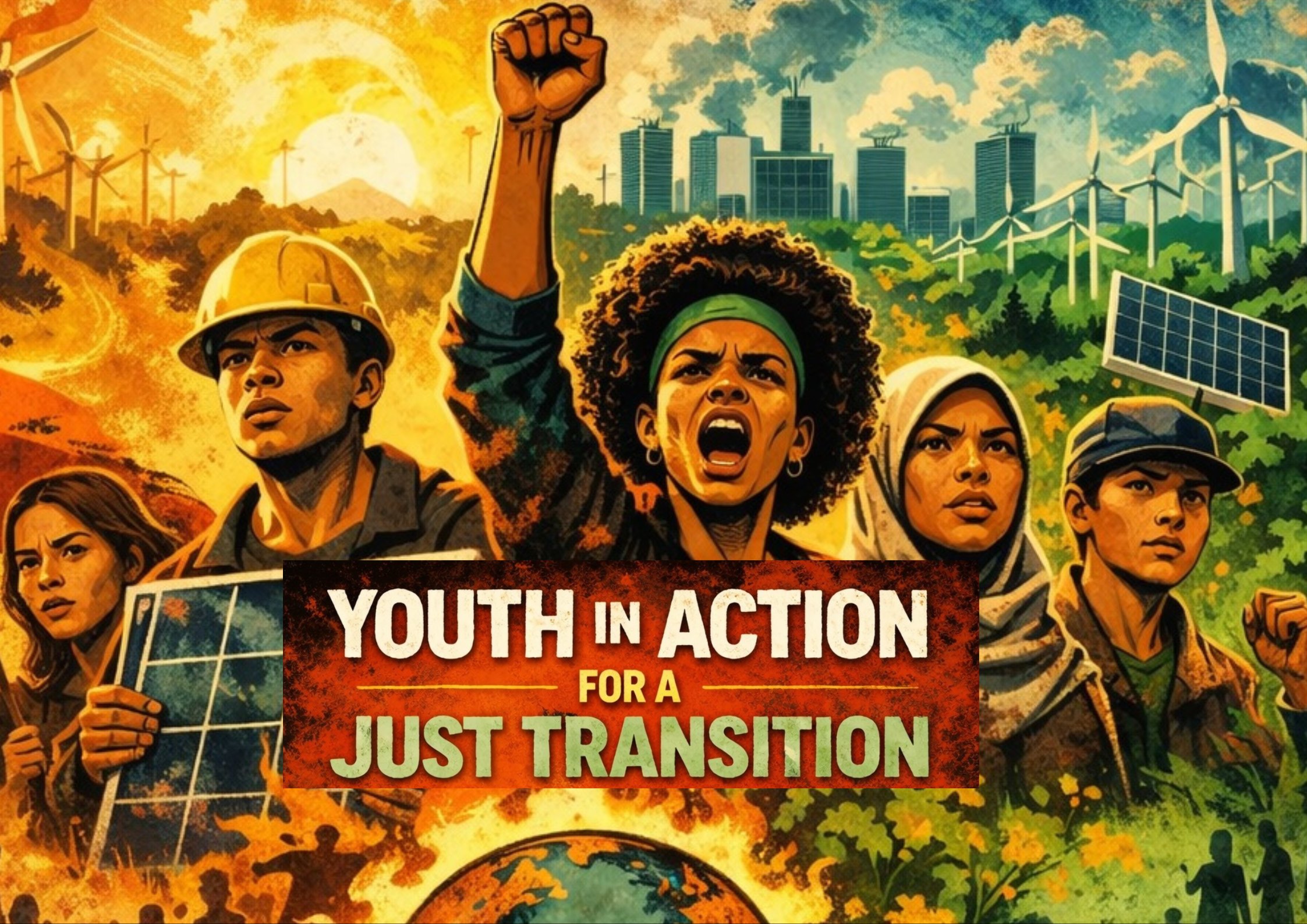
This policy paper, presented by the International Young Christian Workers (IYCW) and delegates of the Public Forum held on May 2, 2025, articulates a collective youth-led agenda for achieving a Just Transition. Amid escalating climate, labor, and economic crises, young people—especially women, informal workers, unemployed youth, and migrants—are disproportionately affected yet remain largely excluded from formal decision-making. Rooted in lived experiences and ethical commitment, this document outlines core principles, identifies urgent challenges, and presents actionable policy demands aimed at governments, international institutions, and civil society. It emphasizes youth as essential stakeholders in forging equitable, sustainable futures.
Introduction
On the occasion of the centenary of the International Young Christian Workers (IYCW), on May 2, 2025, a diverse gathering was held under the leadership of the IYCW at the Public Forum on Social and Ecological Transition. The forum brought together youth delegates, former movement leaders, representatives of allied organizations, and supporters from various sectors and countries. This inclusive assembly recognized the intensifying intersection of climate change, inequality, and youth disenfranchisement—especially affecting women, informal workers, unemployed youth, and migrants—and sought to collectively influence international discourse and policy frameworks on Just Transition.
Vision and Core Principles
We envision a Just Transition that transforms our economic and social systems to be inclusive, equitable, and ecologically sustainable. This vision is founded on:
- Dignity of Work: All labor—formal and informal, including that of women, migrants, and unemployed youth—must be valued, protected, and fairly compensated.
- Environmental Stewardship: Natural resources must be preserved for present and future generations.
- Social and Climate Justice: The burdens and benefits of transition must be shared equitably, prioritizing marginalized and vulnerable groups.
- Democratic Participation: Youth, including women, informal workers, unemployed youth, migrants, and all other marginalized communities, must be fully included in all decision-making processes.
- Global Solidarity: Cooperation across borders and generations is essential for shared progress.
Just Transition is not simply an environmental reform. It is a shift that must go beyond carbon metrics – it must dismantle exploitative systems and prioritize people and planet over profit.
Current Context and Key Challenges
Young workers, especially women, informal workers, unemployed youth, and migrants face multiple intersecting challenges:
- Youth Unemployment and Informality: Over half of young workers globally are employed in informal or precarious jobs, often lacking legal protections, social security, or living wages. Women, migrants, and informal workers are disproportionately represented in these insecure employment situations.
- Gender Inequality: Young women confront persistent barriers, including wage disparities, discrimination, limited access to education and decent work, and exclusion from leadership and policymaking spaces.
- Vulnerable Populations Excluded: Informal workers, unemployed youth, and migrants often lack social safety nets and are excluded from labor protections and policy frameworks, increasing their exposure to economic instability and environmental risks.
- Climate and Environmental Crisis: Accelerating impacts of climate change—such as droughts, flooding, displacement, and biodiversity loss—disproportionately affect low-income and marginalized groups, including women, informal workers, migrants, and unemployed youth.
- Systemic Global Inequity: High-income countries are responsible for the majority of global emissions, while low-income countries and vulnerable populations bear the harshest consequences, deepening inequalities and undermining just transition efforts.
- Exclusion from Policymaking: Despite being most affected, young people—especially women, informal workers, unemployed youth, and migrants—remain underrepresented in national and international policy-making processes concerning social, climate, and economic transitions.
- Unequal responsibility: Rich nations, which contribute most to emissions, push equal commitments on poor countries, stalling climate agreements.
- Exploitative capitalism: A production system driven by corporate greed and profit accumulation continues to sacrifice human dignity and ecological balance.
Policy Demands: A Youth-Led Agenda for Just Transition
- Empowerment and Inclusion of Youth and Marginalized Groups as Strategic Stakeholders
- Ensure the participation of young workers, including women, informal workers, unemployed youth, and migrants in the decision making in national and international governance and advisory bodies for the Just Transition.
- Create formal advisory roles for youth and marginalized groups within ministries and institutions responsible for labor, environment, and development.
- Strengthen trade unions and worker organizations, especially among youth and the unemployed.
- Promote gender equity and ensure women’s full participation in all transition processes.
- Guarantee inclusive dialogues that reflect the voices of the most affected.
- Guarantee Decent Work for All Young People
- Transition informal jobs into formal employment with legal protections, social security, and living wages for all, including women, migrants, and unemployed youth.
- Promote youth-led cooperatives, worker-owned enterprises, and inclusive social businesses that prioritize marginalized groups.
- Advance Green and Sustainable Employment
- Invest in education, vocational training, and capacity-building for youth—including women and migrants—in renewable energy, ecological agriculture, circular economies, and care work.
- Provide start-up funding and institutional support for youth-led ecological and sustainable enterprises.
- Invest in green jobs that provide security, dignity and social value.
- Protect Food Sovereignty and Secure Land Rights
- Guarantee access to land and water for young farmers, particularly women and marginalized groups.
- Support the use of ancestral and non-GMO seeds through legal protections and public funding.
- Promote agroecology and community-based sustainable agriculture.
- Ensure Legal and Institutional Commitments to Justice
- Ratify and enforce ILO Convention No. 190 and all relevant human rights and environmental conventions with special attention to protecting vulnerable youth and workers.
- Legislate climate and labor reforms grounded in equity, gender justice, and sustainability principles.
- Legally recognize ecosystems—land, forests, and water—as subjects with rights.
- Build Solidarity Economies and Promote Responsible Consumption
- Promote solidarity economies: cooperatives, community enterprises, self-managed initiatives and mutual aid systems, especially those led by youth, women, and informal workers.
- Launch global campaigns on ethical consumption, digital justice, and environmental responsibility.
Our Commitments and Actions
As a global youth movement, the IYCW and its allies are not only demanding change – we are building it:
- We strengthen grassroots youth organizing, including women, migrants, informal workers, and unemployed youth, through education, action, and international solidarity.
- We build cross-sector alliances for systemic change that centers marginalized youth voices.
- We expose, confront and monitor public and private institutions to ensure accountability to Just Transition principles.
- We run education and awareness campaigns to awaken critical consciousness.
- We challenge consumerist culture and promote alternative, simple and ethical lifestyles.
- We promote social and solidarity economy initiatives, cultivate local, organic food systems rooted in justice and tradition.
Call to Action
A truly Just Transition cannot be negotiated behind closed doors or dictated by elites. It must rise from the ground up, led by young people, by workers, including women, and by communities fighting for survival and dignity.
The International Young Christian Workers reaffirms its global commitment to this struggle. We urge international organizations, governments, trade unions, faith-based groups, and civil society to embrace and act upon this youth-led policy agenda. A Just Transition requires courageous political will, inclusive governance, and deep ethical commitment. This is a generational imperative and shared responsibility to build a sustainable, just, and equitable future.
We are not the future. We are the present. And we demand to shape the world we live in. Another world is not only possible – it is already being planted.







 English
  Español
  Français