
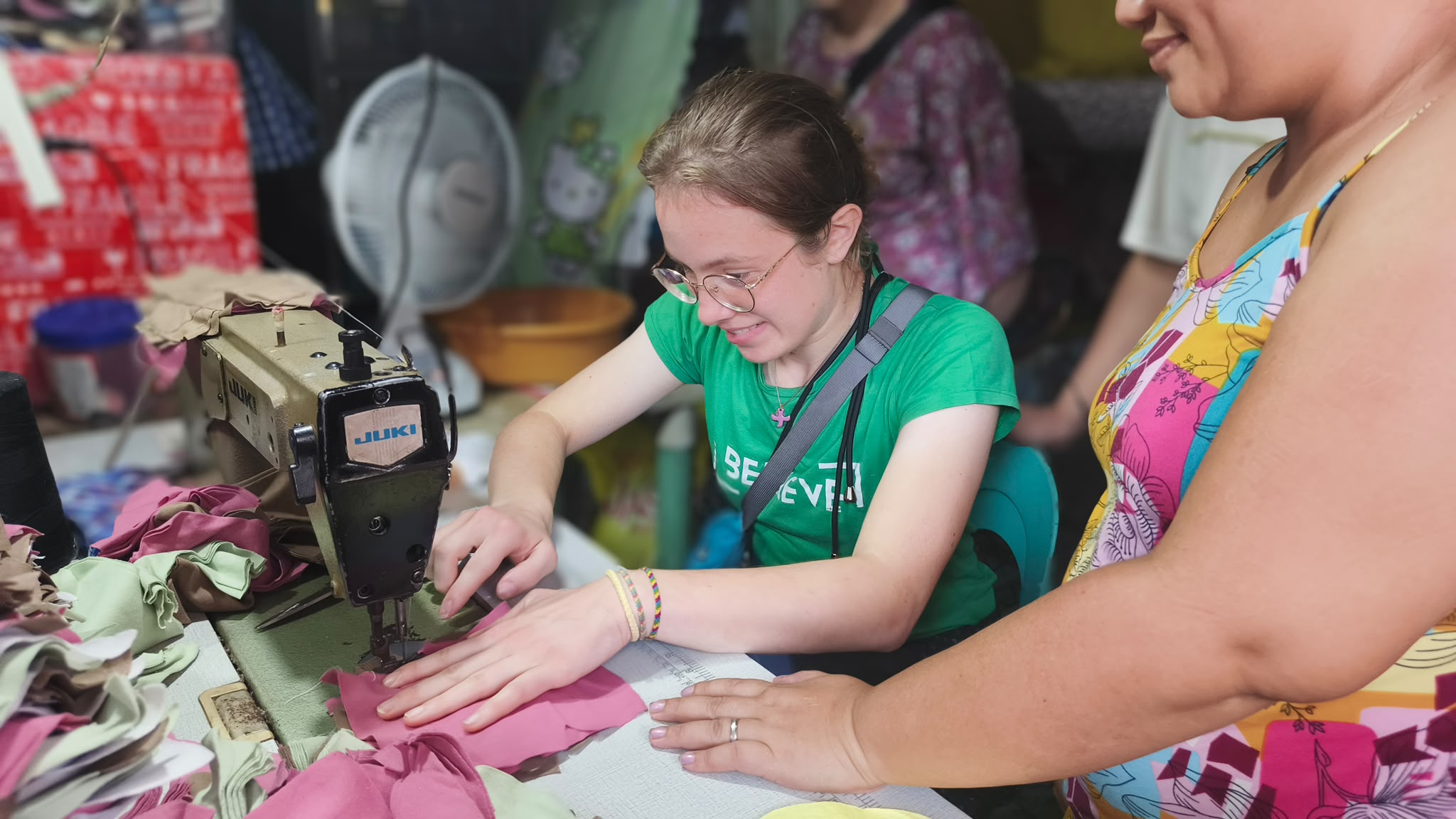
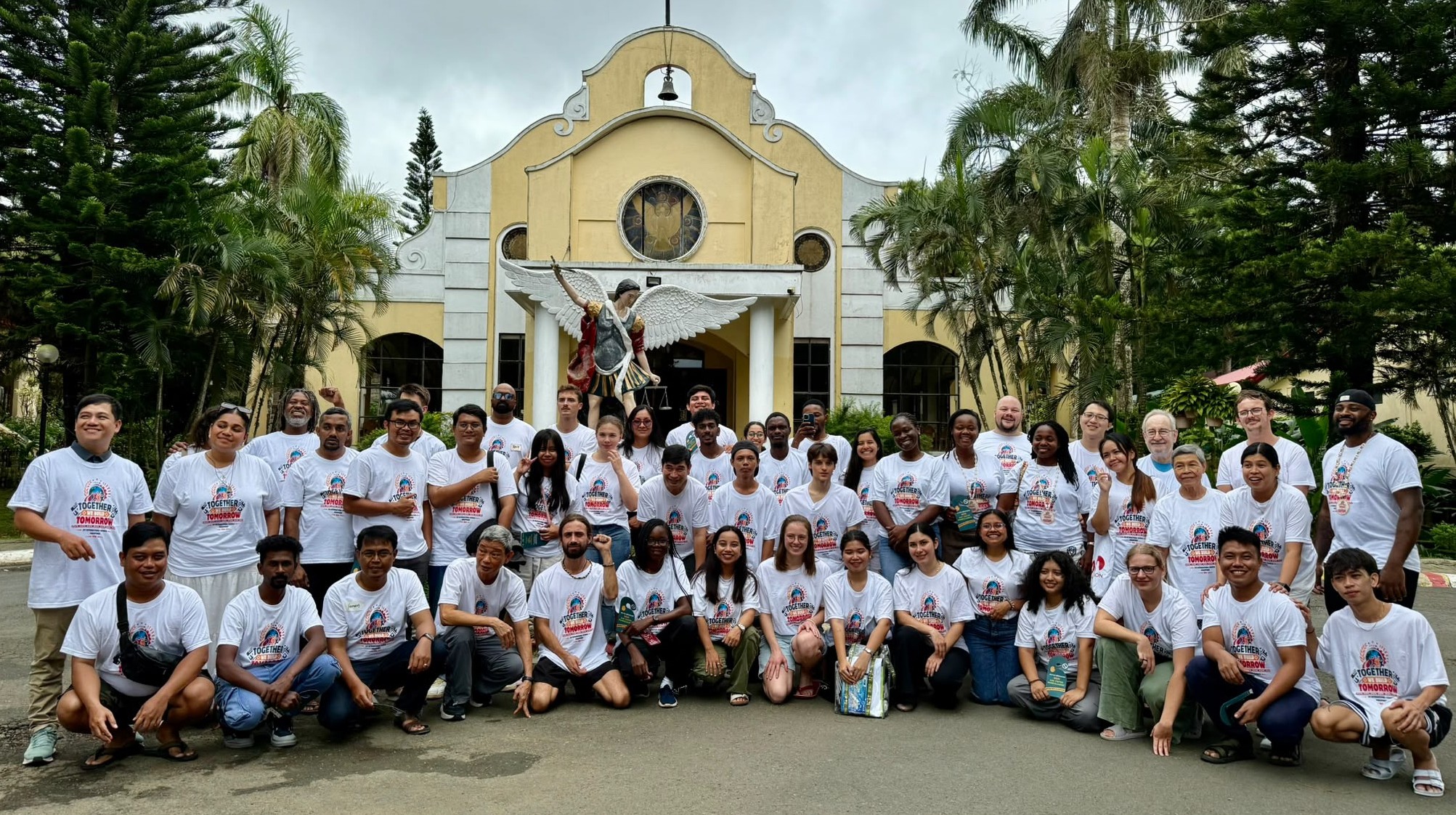
From 5 to 8 October 2026, young workers in the Philippines and international delegates shared daily life, reflected on their struggles, and learned from the collective actions they are building.
International solidarity took shape around shared meals, in workers’ homes, and through conversations about earning a living and organising for change. As part of the XVI International Council of the International Young Christian Workers (IYCW), delegates participated in exchanges of action with young workers in Metro Manila and Camarines Norte.
For the young workers who welcomed them, the exchanges opened a space to share their realities and find encouragement for their organising efforts. For delegates, they offered an opportunity to learn from local actions and reflect on struggles in their own countries. Through living, working, and reviewing experiences together, participants built relationships rooted in mutual learning and a common commitment to dignity.
Sharing life and struggles in Metro Manila
In Metro Manila, delegates joined base groups of pedicab drivers, factory workers from Sakamoto, FIBC, and Vista Verde, and young people in Malanday, Valenzuela. Staying in young workers’ homes allowed conversations to grow out of everyday life: sharing meals, listening to family experiences, and discussing the pressures of work.
These encounters brought participants closer to the realities of precarious employment, low wages, and difficult working conditions. They also shared the determination behind local organising—the patient work of bringing young people together, understanding common problems, and deciding how to respond collectively.
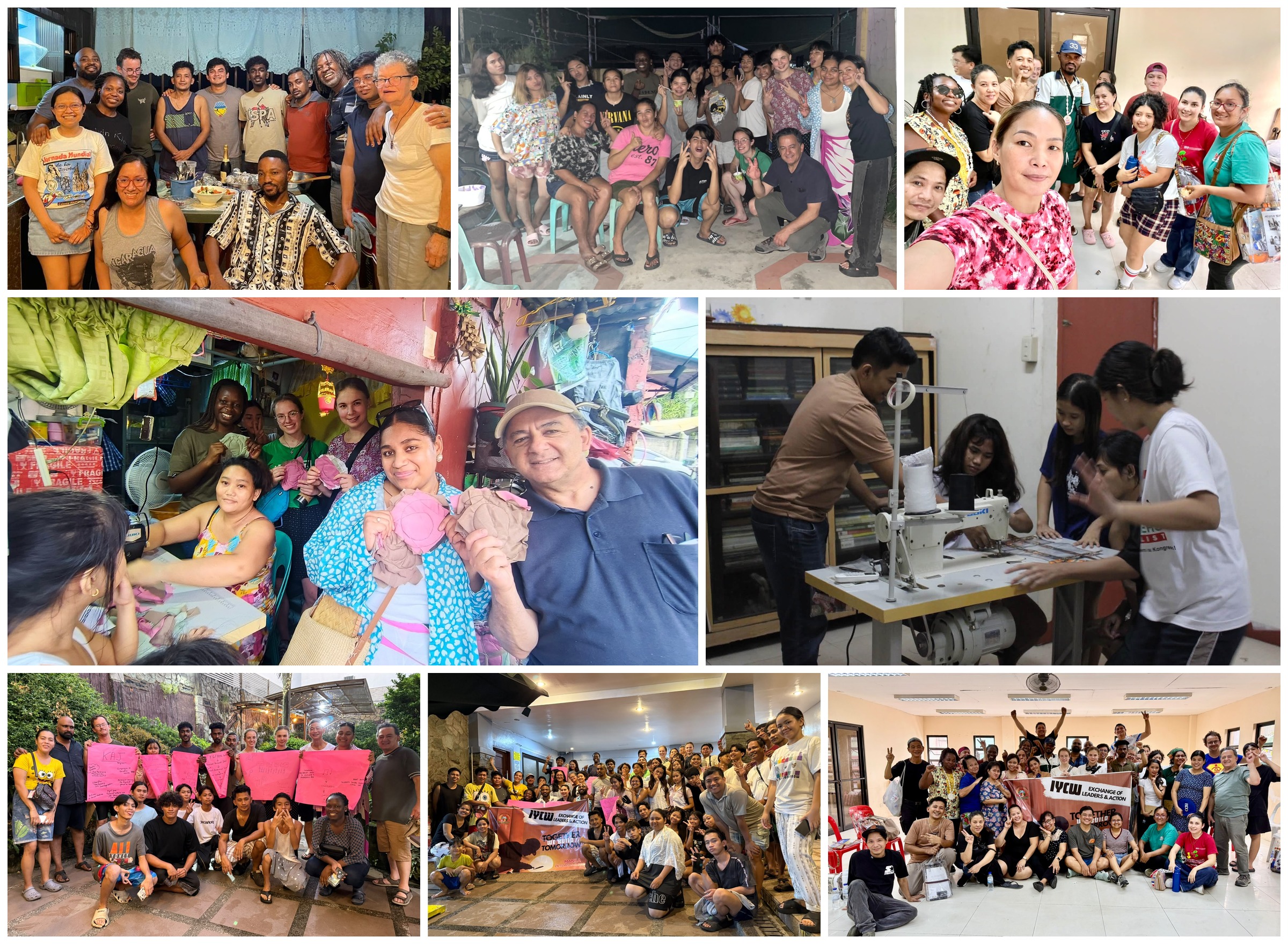
Kevin, a factory worker and YCW base group member from Sakamoto who welcomed delegates into his home, described what the exchange meant to him:
“Through this international exchange, we felt that we are not alone in our struggles. Having young workers from different countries stay with us, listen to our experiences, and learn about our working conditions gave us strength and encouragement. We felt their solidarity and support for the actions we are taking as a group.”
For Kevin and his group, the exchange affirmed the value of their efforts. Their concerns were heard beyond their workplace and community, while their actions became a source of learning for workers from other countries.
“This exchange reminded us that, even though we come from different countries, we face similar struggles, and together, we can continue fighting for our rights, better working conditions, and a dignified life.”
Organising, resisting, and defending workers’ rights
The exchanges also created space to analyse the risks young workers face when they organise. During the Review of Life and Workers’ Action (ROLWA), Nonito shared how his involvement in the YCW encouraged him to take action at the Sakamoto factory.
He explained that learning the importance of being organised led him to begin organising an independent union. According to his testimony, when the employer learned about these efforts, they brought charges against him that he described as false and dismissed him from work.
Despite this, Nonito remained determined:
“But I was not afraid because I know my right.”
He described how he and his fellow workers continued organising, knowing that the struggle concerned workers at both Sakamoto and FIBC. He also shared the outcome of challenging his dismissal:
“We also filed a case on this forced dismissal and we won the case.”
Nonito’s testimony gave participants a concrete experience to reflect on together: the connection between learning about rights, building an organisation, and sustaining action under pressure. His account showed how a young worker’s growing confidence can become a commitment to defend the rights of others.
For Filipino participants, this experience offered encouragement for their own organising. For delegates, it raised questions to bring back to their movements about supporting workers who face retaliation and strengthening solidarity throughout a struggle.
Learning experiences of young workers in Camarines Norte
In Camarines Norte, delegates exchanged experiences with the Mercedes Young Fishermen Association, whose members have been organising and developing collective actions through the YCW.
Learning happened through participation in their actions. Delegates helped prepare and smoke fish, experienced selling fish, also experienced a short training on food processing in the shared facility used by the YCW, and discussed the challenges of earning a livelihood from fishing. Working alongside the young fishermen opened conversations about the skills, effort, and uncertainty involved in their daily work.
Courtesy visits to the barangay and municipal government of Mercedes also provided an opportunity to connect the young fishermen’s realities and collective actions with local authorities.
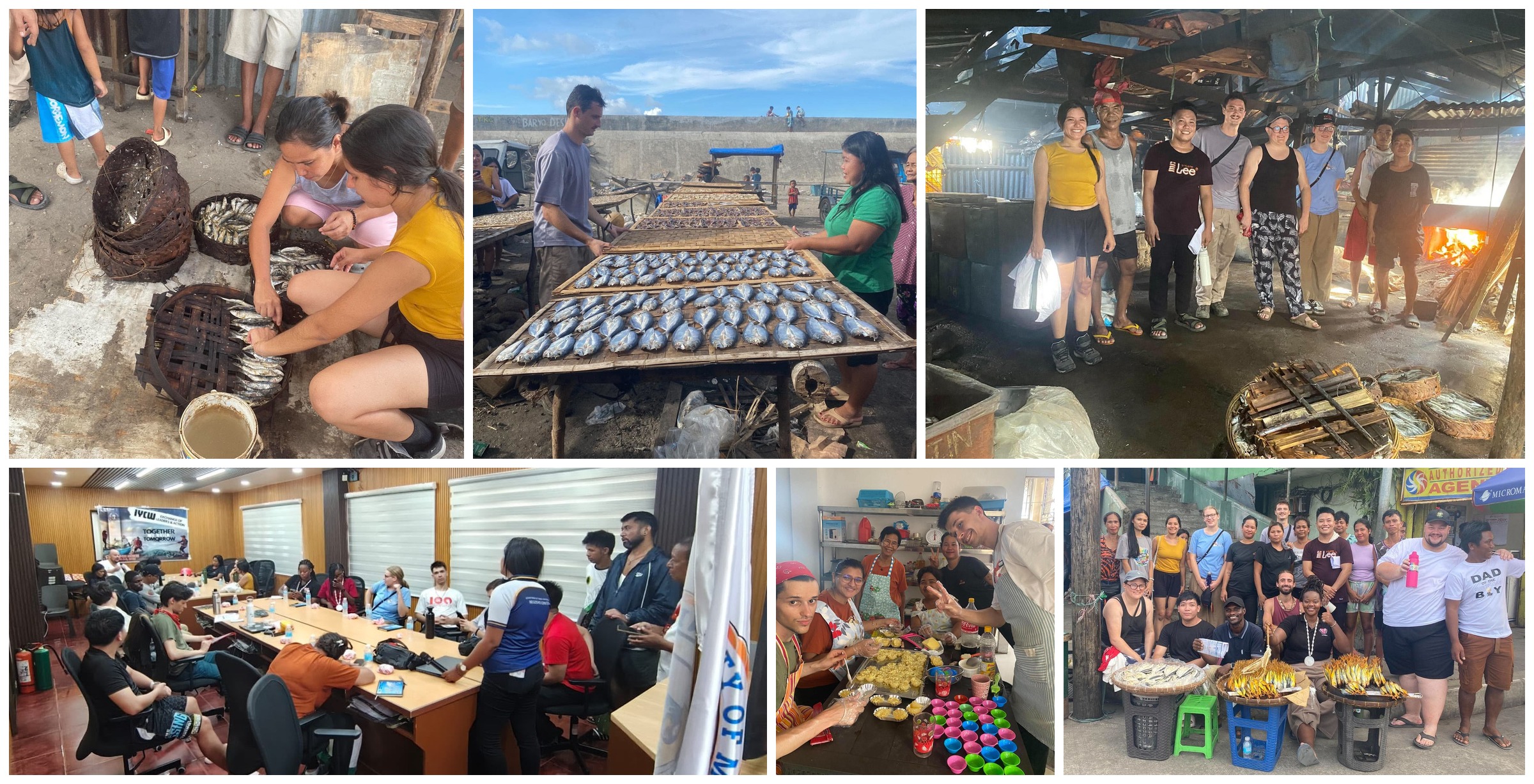
The exchanges continued with young farmers in Hinipaan and young miners in Jose Panganiban. Together, participants reviewed their living and working conditions, the difficulties they face, and the actions they are developing in response.
Across these exchanges, YCW members in Camarines Norte shared knowledge gained through experience: how they bring people together, reflect on common concerns, and work towards change. Their communities became spaces of learning for the international movement.
An exchange that strengthens both hosts and delegates
The impact of the exchanges moved in both directions. Young workers in the Philippines saw their experiences recognised as an important contribution to a wider movement. Sharing their actions with international delegates brought encouragement and a stronger sense of connection beyond their communities.
Delegates, in turn, encountered experiences that could deepen their own organising. They were invited to analyse these realities, recognise similarities across different working conditions, and consider how lessons from the Philippines might inform action at home.
Salmone, a delegate from YCW Namibia, reflected:
“The exchanges helped us not only to understand the realities of young people in these communities, but also to learn from their experiences of collective action and see how we can apply these lessons in our own movements. Most importantly, they helped us build and strengthen solidarity among us.”
The relationships formed through shared daily life gave this solidarity a personal meaning. Behind discussions about workers’ rights were people who had welcomed one another into their homes, shared their concerns, and taken time to understand each other’s actions.
Carrying solidarity into action
Factories, pedicabs, fishing communities, farms, and mines present different conditions. Yet, the exchanges revealed connected struggles for secure livelihoods, rights, equality, and the power of young workers to shape their futures.
They also made the leadership growing within these communities visible. Young workers are analysing their conditions, making decisions, and organising collective responses. From Nonito’s experience of union organising to the actions of young fishermen, farmers, and miners, their contributions helped participants explore what change requires in practice.
The task after the exchanges is to carry that learning into everyday organising: sharing it with other young workers, reflecting on its meaning in each country, and strengthening collective action.
During four-day exchanges in the Philippines, hosts and delegates built international solidarity through opening their homes, sharing work, listening closely, and reviewing action together. They strengthened the understanding that each local effort belongs to a wider struggle—and that young workers, organised together, can help one another move forward.
Different realities, one common struggle, one international solidarity!




 English
 Español
 Français
