
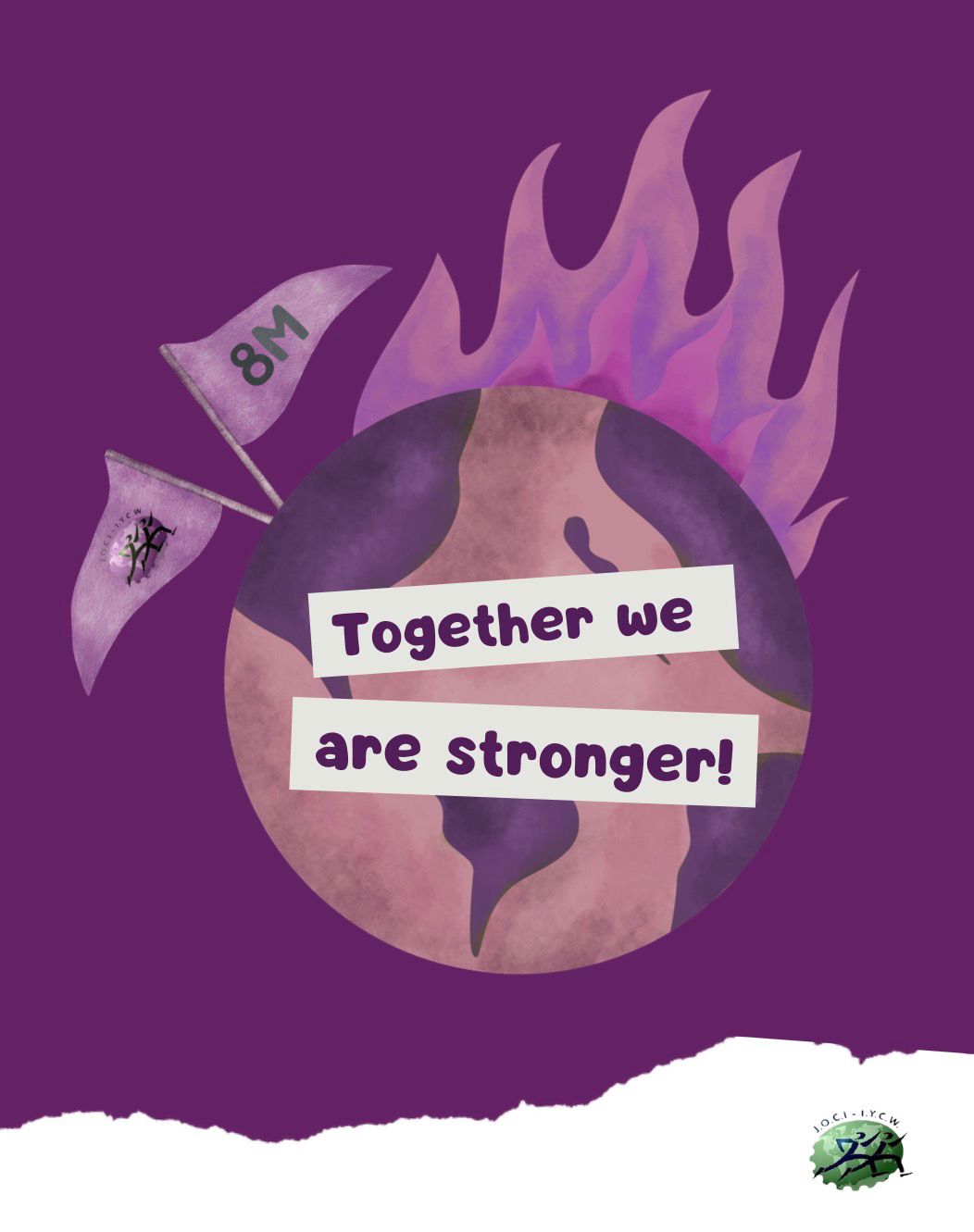
Today, on International Women’s Day, we stand in solidarity with every woman whose voice has been silenced by fear, violence, discrimination, or stigma — including in the very spaces where she should feel safe and valued: her workplace. While this day celebrates women’s achievements all through history, it must also confront a persistent reality: gender inequality and gender-based violence remain deeply embedded in the world of work.
We begin with a testimony that reflects a reality faced by countless working women:
“I was on my way home from work. After I got off transportation and was walking in the street, a man touched me inappropriately. I stopped him and confronted him. During this, someone nearby blamed me for what I was wearing. Since no one clearly witnessed what happened and there were no cameras, the most I could do was confront him and call him out in the street.”
This is one testimony from our leader — but it represents many more stories that remain unspoken, undocumented, or dismissed. For too many women, harassment, fear, and insecurity follow them on their way to work, during working hours, and on their way home.
Despite advances in technology, economic growth, and increased female participation in the labor market, women remain disproportionately exposed to insecurity, harassment, and violence, both inside and around workplaces. Structural inequalities persist, revealing a hard truth: economic progress has not ensured safe, equal, and dignified working conditions for women.
Globally, nearly one in three women has experienced physical or sexual violence in her lifetime. Millions face sexual harassment in public spaces and workplaces, limiting their mobility, career choices, productivity, and economic independence. Every year, tens of thousands of women are killed because of their gender — a stark reminder that inequality at work cannot be separated from inequality in society.
These are officially recorded figures, yet they remain vast underestimates. Fear of retaliation, job loss, social stigma, and weak reporting mechanisms silence many women, particularly those in precarious employment, informal sectors, or leadership positions.
Gender-based violence and harassment at work are not individual issues — they are systemic violations of human rights and labor rights. They reinforce unequal power relations, push women out of the workforce, and block access to leadership, fair wages, and economic security.
We must ask: What is the value of economic development if women cannot work safely? What does “equal opportunity” mean when women are forced to tolerate harassment to keep their jobs? How can workplaces thrive while half the workforce remains undervalued and unprotected?
While civil society efforts and workplace policies are growing, real change remains limited. Gender inequality in employment is rooted in social, economic, political, and cultural systems — and addressing it requires more than symbolic commitments. It demands structural reform, accountability, and enforcement.
At the IYCW, we affirm that gender equality at work is inseparable from gender justice overall. Safe workplaces, equal pay, freedom from harassment, and access to leadership are not privileges — they are rights grounded in women’s inherent dignity.
Women deserve equal opportunities and equal pay.
Women deserve safe, harassment-free workplaces.
Women deserve the freedom to work, lead, and exist without fear.
Today, we call for systemic change — through political will, enforceable labor protections, accountability mechanisms, and cultural transformation. Without gender equality at work, there can be no true progress, no sustainable development, and no just future.
We will not accept anything less than equality, dignity, and justice in the world of work.







 English
  Español
  Français